
Great Southern Bank AU: statements and filtered transaction exports
Updated · 3 min read
The desktop apps export date, description, and amount as CSV. Open CSV in Excel to save an XLSX workbook. Statement support varies: verify the result against your own PDF.
Search the statement list with the right holder access
- Sign in to Australian Online Banking and open Accounts → eStatements.
- Set Date Range, then choose Show eStatements.
- Find the statement date and use Actions → view.
- Open the PDF (Portable Document Format) and check its account and issued period.
The help page requires the primary account holder, unless a joint owner has requested eStatement access. If another joint holder can see the document but you cannot, resolve that access arrangement with the bank rather than repeatedly widening the date range. It is a permission condition for this service, not evidence that the statement never existed. Holder-access conditions.
Separate an archive search from statement production
Great Southern's eStatement service page describes access as far back as seven years. This is the statement archive, not a promise that a recent-transaction screen shows seven years or that every closed product remains accessible.
For a newly due biannual statement, the how-to page allows up to nine business days during peak processing. Changing the search period does not create a statement still being produced. Check whether you are looking for an existing issued document or waiting for the latest six-monthly issue before troubleshooting the viewer.
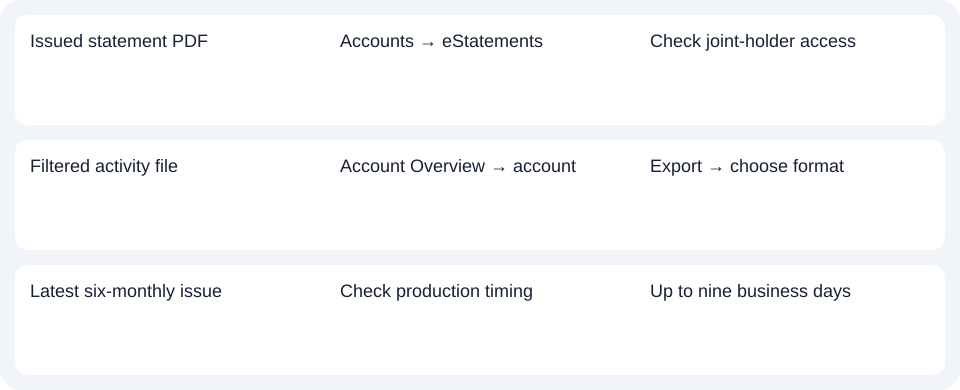
| Needed result | Bank route | Decision |
|---|---|---|
| Issued PDF statement | Accounts → eStatements | Date Range → Show eStatements |
| Joint holder cannot see it | Check requested eStatement access | Primary-holder rule applies |
| New biannual issue missing | Allow peak processing time | Up to nine business days |
Export the selected transaction history directly
For spreadsheet work, the Australian personal Online Banking FAQ provides a native export, separate from the issued eStatement:
- Open Account Overview and select the account.
- Set the required date range. Use amount range, credit/debit type or keyword filters only if you want that subset.
- Choose Export and select PDF, CSV, bar-delimited or QIF.
Those filters define the exported selection. For example, a debit-only search is not the same record as both sides of the account's activity. The FAQ says the initial view shows up to the most recent six months; it does not establish a maximum export history. Change the date range before interpreting an older transaction's absence. Transaction display and export instructions.
The downloadable transaction listing can include debits, credits and a running balance. Its named formats do not establish exact CSV column headers, signs or a bank-issued XLSX workbook. Keep an issued eStatement when that document is required, rather than relabelling a filtered transaction PDF as the statement. These controls concern Australian personal banking; Business+ and the unrelated US Great Southern Bank are different services.
Choose the record before converting it
Use native CSV when its selected activity meets the spreadsheet task. For a statement-only record, resolve holder access and issue timing, then retain the PDF. Use the record planner to record your chosen route and the outstanding document period. The shared CSV guide explains spreadsheet checks. LocalExtract converts one PDF locally at a time to date,description,amount CSV (Comma-Separated Values); Excel can save XLSX. Compare the output with the original. Downloads.
Official sources checked October 14, 2026.
LocalExtract Team
We build LocalExtract, a desktop bank statement converter. Questions or corrections? Contact · Editorial policy